


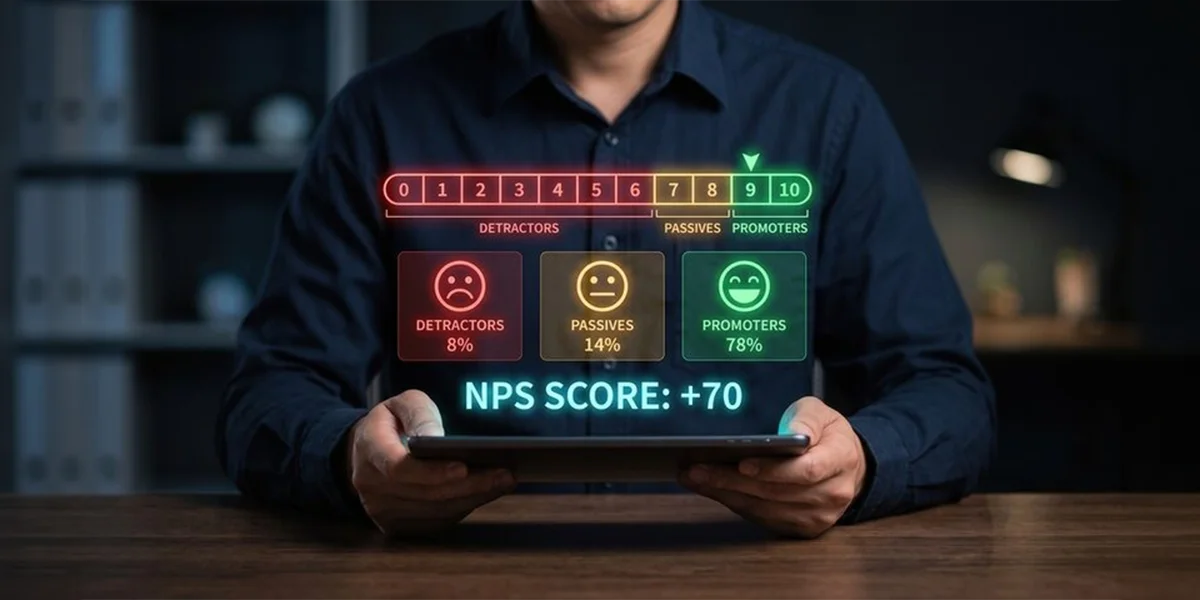
Customer NPS survey can do more than measure whether customers would recommend a brand. When the results are connected with customer behaviour, purchase history and communication preferences, they can become useful for understanding why people stay, disengage or leave. This makes survey data more valuable for businesses looking beyond a single score.
A well-planned survey can reveal differences between enthusiastic customers, neutral respondents and those who may have concerns. The real opportunity comes after collecting the responses, when businesses translate these signals into practical retention actions. Instead of treating feedback as a standalone research exercise, companies can use it as part of a broader customer relationship strategy.
Customer NPS Survey and the Value of Loyalty Signals
Customer loyalty is rarely based on one interaction. A customer may remain with a company because of consistent service, convenient communication, product reliability or the confidence built over several transactions. Survey responses can help businesses understand which experiences are influencing that relationship.
The score itself provides a useful starting point, but the comments behind the score can offer greater context. A respondent who gives a high rating may praise responsive support, while another may mention product quality or ease of ordering. Looking at these details can help marketers understand what should be protected and what may need improvement.
An effective programme can connect responses with other business information, such as:
- Purchase frequency and transaction value
- Length of the customer relationship
- Previous support interactions
- Product or service preferences
- Engagement with marketing communications
- Changes in purchasing behaviour
This wider view allows businesses to move from simply asking whether customers are loyal towards understanding the factors contributing to that loyalty.
Turning Survey Findings Into Retention Marketing Strategies
The next step is to decide how feedback should influence communication. Retention marketing strategies should not treat every customer in exactly the same way because different groups can have very different expectations. A long-standing customer who praises the business needs a different approach from someone who has recently expressed dissatisfaction.
Promoters can be encouraged to remain engaged through relevant updates, loyalty initiatives or opportunities to share their experiences. Passive respondents may benefit from targeted communication that addresses areas where their experience could be strengthened. Customers showing dissatisfaction may require a more direct service recovery process rather than another promotional message.
Timing matters as much as message selection. If a customer raises a concern immediately after an interaction, delaying the response can weaken the value of the feedback. Connecting survey information with timely customer journeys can help businesses respond while the experience is still recent.
Building a Practical Customer Feedback Loop
Feedback becomes more useful when it leads somewhere. A customer should not feel that their opinion disappears into a database after submitting a response. Businesses can create a structured feedback loop in which responses are reviewed, relevant teams receive insights and appropriate actions are recorded.
This process can include several stages:
- Collect feedback at relevant customer touchpoints
- Classify responses by sentiment and business importance
- Identify recurring themes
- Assign actions to responsible teams
- Monitor whether customer behaviour changes afterwards
- Review results and improve future campaigns
A closed-loop approach can strengthen the relationship between research and marketing. It can also help internal teams understand that customer feedback is not simply a reporting requirement but a source of information for operational improvement.
What NPS Survey Analysis Can Reveal About Customer Behaviour
NPS survey analysis can become more meaningful when results are compared with behavioural information. A strong score may look positive at first, but the underlying customer activity may tell a more complicated story. For example, a customer could express satisfaction while gradually reducing purchases.
This is why survey responses should be interpreted alongside other indicators. Changes in order frequency, engagement, complaints and account activity can provide additional context. When these signals are viewed together, marketers can identify customers whose attitudes and behaviours may be moving in different directions.
Segmentation is particularly useful here. Instead of producing one overall report, teams can examine patterns by customer type, product category, relationship stage or interaction history. This can reveal where loyalty is strong and where retention risks deserve closer attention.
Using Examples to Improve Survey Design
Businesses often look at NPS survey examples when developing their own questionnaires. However, adopting a template will not necessarily generate useful data if the questions are irrelevant to the customer experience process.
The main recommendation question can be supported by a carefully chosen follow-up. Customers could be invited to explain the reason behind their rating or identify an experience that influenced their response. The wording should remain straightforward so that respondents can answer without spending excessive time on the questionnaire.
Survey length is another important consideration. A short, focused questionnaire can make participation easier, particularly when customers receive it after a recent interaction. Businesses should avoid adding unnecessary questions simply because additional data appears useful.
Connecting Feedback With Customer Retention
A customer survey and retention approach can help businesses understand whether improvements are influencing customer relationships over time. Instead of measuring satisfaction once, organisations can compare feedback with later behaviour to determine whether particular actions appear to make a difference.
For instance, a customer who reports difficulty during onboarding could receive additional guidance. Their future engagement can then be reviewed to understand whether the intervention improved the experience. This creates a practical connection between what customers say and what happens afterwards.
The process should remain measured rather than assuming that every change in behaviour is caused by one survey response. Customer decisions can be influenced by pricing, competition, product availability and wider market conditions. Survey information works best when it forms one part of a broader evidence base.
Making NPS Survey Results More Actionable
The Net Promoter Score survey is made more relevant to the business if the objective behind it is clearly stated before conducting it. For businesses, it should be quite clear if they need to determine their service quality level or anything else.
Question timing should reflect that purpose. A survey sent immediately after customer support may capture service-specific impressions, while a relationship survey sent periodically can provide a broader view. These different approaches should not automatically be combined because they answer different research questions.
Businesses should then establish how results will be shared internally. Marketing teams may need customer segments, service teams may need individual concerns and senior managers may need broader trends. Presenting the same information in a single format may therefore limit its usefulness.
Creating More Relevant Customer Experiences
The ideal feedback program will eventually make life better for customers rather than creating reports. Customers will feel motivated to provide feedback when they are shown that it can help shape the nature of their future dealings.
Relevant personalisation can be one outcome. A customer who frequently uses a particular service may respond better to information connected with that service than to generic communication. Similarly, customers who have experienced a problem may need reassurance and support before receiving another sales message.
Consistency is equally important. If survey findings repeatedly highlight the same problem but no visible improvement follows, confidence in the feedback process may decline. Organisations should therefore track recurring issues and determine which ones require operational changes rather than treating every response as an isolated comment.
Applying Customer NPS Survey Insights in the UAE
A market research service in UAE can help organisations structure customer feedback programmes around their specific business objectives. Different sectors may require different sampling approaches, survey channels and reporting methods. The research process should therefore reflect the type of customers being studied and the decisions the business expects to make.
Local customer expectations can vary between industries, customer segments and service environments. Businesses operating across multiple channels may need to compare experiences between digital interactions, physical locations and direct support. This can provide a more balanced view of loyalty instead of relying on one customer touchpoint.
The most useful outcome is not necessarily a higher score. It is a clearer understanding of what influences customer relationships and which actions can realistically improve them.
Turning Research Into a Long-Term Retention Process
Professional customer feedback survey services can help businesses establish a formal process for gathering and analysing customer views. But the technique itself is just one of many steps required to achieve success. It includes proper sampling, good questions, uniformity of analysis and follow-up actions.
Companies can establish regular review cycles to identify emerging concerns and changing expectations. Comparing results across periods can reveal whether particular issues are becoming more common or whether previous improvements are producing positive movement. This creates a longer-term perspective on customer relationships.
Working with a market research company can be particularly useful when organisations need an independent research process or more advanced interpretation of customer data. External expertise can help strengthen methodology while allowing internal teams to focus on turning findings into business actions.
Conclusion
Customer NPS survey data becomes significantly more valuable when it is connected with customer behaviour and retention planning. The score can indicate the overall direction of loyalty, while comments and behavioural signals provide the detail needed to understand what may be influencing individual customer decisions.
The strongest programmes do not stop at measurement. They link feedback to segmentation, service recovery, communication, and ongoing evaluation in order for customers’ views to influence decision making. This would help organizations in developing a stronger relationship and in identifying possible retention issues at an early stage.
In the end, it is important to view loyalty data as a continuous source of knowledge rather than an annual report. Interpretation of results from studies together with the actions taken by organizations will lead to improved connections among customers’ comments, behaviors, and the brands’ actions.
Point Consultancy provides customer feedback and NPS research services that help businesses understand customer loyalty, identify retention opportunities and turn survey insights into actionable strategies.
Frequently Asked Questions
What can a customer NPS survey tell a business about customer loyalty?
The customer NPS survey helps us understand how likely our customers are to recommend our organisation by answering a series of questions. Combined with behavioural data, it can help identify patterns associated with stronger or weaker relationships between our organisation and its customers.
How often should businesses collect customer feedback?
The ideal frequency depends on the customer journey, interaction type and purpose of the research. Transactional feedback may be collected after important interactions, while broader relationship measurement can take place at suitable intervals.
Can survey results directly improve retention?
Survey results can support retention when businesses use them to identify concerns, segment customers and guide relevant actions. The results are most useful when teams monitor what happens after those actions and refine their approach based on subsequent evidence.
Tags
#NPS survey analysis
Share
Post a comment Cancel reply
Related Posts

September 21, 2026
Customer Experience Analysis: How Customer Journey Data Can Reveal Problems Before They Become Complaints
Customer experience analysis gives businesses a practical way to understand what happens throughout a customer’s…

August 17, 2026
Can One Customer Experience Change Brand Loyalty? What Customer Satisfaction Analysis Reveals
Customer satisfaction analysis can reveal something that sales figures alone cannot: why a customer decides…